By
Kaushal Kishore
Materials Engineer, Roorkee
The new Solani aqueduct on Ganges canal Roorkee was built with prestressed concrete which allows for longer spans and a simple more robust design compared to old bricks, lime- surkhi mortar masonry arches of the old aqueduct, in which 8.5 crores bricks were used, while iron railing used in the sides of two lanes were imported from England. This is interesting to note that materials bringing those days on ship from England to Indian ports take 6-10 weeks via the Suez canal or 3 to 6 months via the longer Cape of Good Hope. Calculate in it also time taken on road from Indian ports to Roorkee.
After retirement from University of now IIT Roorkee I joined M/S Roffe Construction Chemicals Pvt.Ltdd, Mumbai as it’s Chief Concrete Technologists afterwards I became it’s one of the Director.
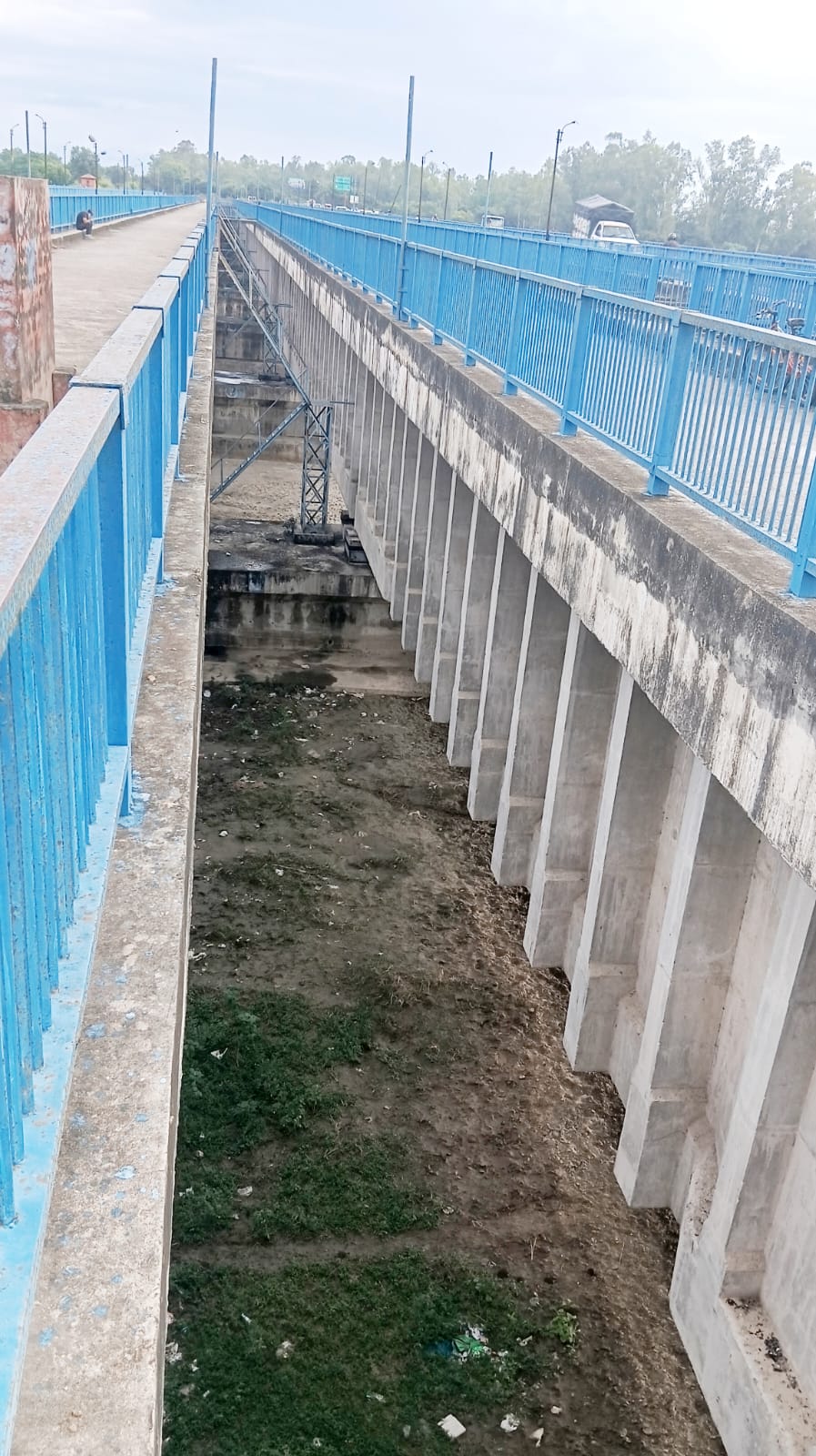
AQUEDUCT picture taken on 7/10/2025
For the contractor of above aqueduct I designed M-40 grade of concrete with Roffe superpladticizer. Those interested may read my paper by visiting Google site and log in; Civil engineering portal The Ganges canal by Kaushal Kishore.
I had designed numerous concrete mix design almost all cements of India in this I find Utra Tech cement as one of best cement OPC and PPC both With Ultratech cement I had designed numerous concrete mixes from ordinary strength to M-80 grade concrete, self compacting concrete, shot crete concrete, fibre reinforced concrete, fly ash concrete and more There is life after retirement and after retirement I worked for 30 year’s which includes in free time working in home research and testing laboratory and numerous construction sites visits almost all India and outside India. At my age of 92 years I still work for 12 hours daily.
I had never worked for money. In spite of doing so gigantic work what to say about car I even do not have 2 wheeler not any of my house not a single inch of land in this world only pension from IIT Roorkee and few clothes
























sir, what are the subjects in the civil engineering
With reference to comment by Mr Raviteja on this website here are the Specialization in Civil Engineering
Specialization
There are seven major disciplines within civil engineering that are closely interrelated:
Structural
As a structural engineer, you will face the challenge of designing structures that support their own weight and the loads they carry, and that resist wind, temperature, earthquake, and many other forces. Bridges, buildings, offshore structures, space platforms, amusement park rides, and many other kinds of projects are included within this exciting discipline. You will develop the appropriate combination of steel, concrete, timber, plastic, and new exotic materials. You will do
the planning and design, as well as visit the project site to make sure the work is done properly.
Environmental
The skills of environmental engineers are becoming increasingly important as we attempt to protect the fragile resources of our planet. Environmental engineers translate physical, chemical, and biological processes into systems to destroy toxic substances, remove pollutants
from water, reduce non-hazardous solid waste volumes, eliminate contaminates from the air,
and develop groundwater supplies. In this field, you may be called upon to resolve issues of
providing safe drinking water, cleaning up sites contaminated with hazardous materials,
disposing of wastewater, and managing solid wastes.
Geotechnical
Geotechnical engineering is required in all aspects of civil engineering, because most projects
are supported by the ground. As a geotechnical engineer, you might develop projects below
ground, such as tunnels, foundations, and offshore platforms. You will analyze the properties
of soil and rock that support and affect the behavior of these structures. You may evaluate the
potential settlements of buildings, the stability of slopes and fills, the seepage of ground water
and the effects of earthquakes. You will investigate the rocks and soils at a project site and
determine the best way to support a structure in the ground. You may also take part in the
design and construction of dams, embankments, and retaining walls.
Water Resources
Water is essential to our lives, and as a water resources engineer, you will deal with issueconcerning the quality and quantity of water. You will work to prevent floods, to supply water for cities, industry, and irrigation, to treat wastewater, to protect beaches, or to manage and redirect rivers. You might be involved in the design, construction, or maintenance of
hydroelectric power facilities, canals, dams, pipelines, pumping stations, locks, or seaport facilities.
Transportation
Because the quality of a community I directly related to the quality of its transportation system,
your function as a transportation engineer will be to move people, good, and materials safely
and efficiently. Your challenge will be to find ways to meet our ever-increasing travel needs on
land, air, and sea. You will design, construct, and maintain all types of transportation facilities,
including highways, railroads, airfields, and ports. An important part of transportation
engineering is to upgrade our transportation capability by improving traffic control and mass
transit systems, and by introducing high-speed trains, people movers, and other new
transportation methods.
Construction
As a construction engineer, you are the builder of our future. The construction phase of a project represents the first tangible result of design. Using your technical and management skills will allow you to turn designs into reality – on time and within budget. You will apply your knowledge of construction methods and equipment, along with the principles of financing, planning, and managing, to turn the designs of other engineers into successful projects.
i have b.tech civil….in which area should i try as i am a girl
well as i think you should select the branch which you like the most..no matter if you are girl or boy… civil engineering fields are all practical and site related .whether it is structure side or enviromental,geotech etc… but one thing if you dont want to work in the field you should learn softwares then..so you can work on softwares and design structure in your home or office with minimum touch with site
Hai radhika sister I am a student in iiit i phase some problem please give any suggestion to me
What is B.Tech and the difference between eng. and b.tech?????
u may try for Material Testing Laboratories (Q.A/Q.C Engineer) good scope, if u hav deep knowledge of Designing nd can worked with Auto-Cad, StaadPro or Primavera then may go with them.
please give a brief descryption about civil engineering
You can refer to the homepage of this website, thats all about civil engineering only:)
gollababu you have to select ece branch.you are good at study i know.you are select ece group in rgukt.
Sir,Is it suitable for girls? I want to take a branch civil engineering. Please suggests me.
Read this
https://www.engineeringcivil.com/is-civil-engineering-suitable-for-girls.html
It is. preferably as long as you opt as design engineer.Else it is survival of the fittest in field work. Real tough on large scale projects.
it is not matter whether u r girl or boy.it is all about geometry and math and handling with hard condition.
sir, please tell me the uses of Civil Engineering in briefly?
Could you tell me the applications of civil engineering?
I’m studying Civil Engineering and would like to become a Structural Engineer. Do you have any tips?
Sir ,i am poor in physics and maths.But i am interested in civil engineer. So can i take this group.Give me suggestions.
no body is pur in anythin…… jus make an interest … try ta learn more what is it actually….. no subjects is tough or hard . jus try ta relate that in ur own life…. so simple………………..as it is……..
no problem if you are interest in civil go for it…
sir please tell me. civil engineering is a good branch or badbranch?
nuttin is bad…. all is good.. . ya only gotta think wide … it may be civil or mechanical or EEE….. think world and go get ready fo da process…….. i can only say this planet need peace.( greenary , freshness, ) think big… all da best….
No branches r good or Bad, it depends upon ur calibrety – civil engg. is a Field Type Ruff-n-Tuff job, job full of adventures, full of practical problems & solutions, full of Tentions- works under Deadline stressess.
mostly suitable for guys.. but many other fields like Architectures, Auto-Cad, Designing and may b Material Testing in Laboratories jobs r also there …
Sir, I have lot of interest in civil engineering. I want to serve my country by this way. But I afraid of maths,could you suggest me that how to improve my skills in maths and what topics of the maths involved in this civil engineering?
no maths den no engineerin…… engineerin is nuttin but buildin….. n fo buildin ya need a help of maths…. so learn how much ya can…. practise is wot make ya best……. best maths best engineer……..
Sir, tell me the which specilization in civil engineering suitable for girls? That will give more future for to me
Dear Rajeswari, If you are ready to do some hard work and patience to work with computer for long hours,it is better to take structural engg as your specialised subject.
Tnx,UK.
sir/madam,
i have completed my B.E-Civil in the year 2008 and am working as an A.E in one of the consulting firm till date and i am interested to pursue M.E/M.Tech in Highways or in construcion management or in concrete technology or in environmental or in traffic and transportation through distance education.
i need recognised institution to pursue my P.G and i beg you kindly send me the details for the same.
And if not possible atleast i wish to do civil engineering software courses during sundays in Bangalore and for this i need training institutes which train employees or professionals. so please find me the details and do the needful.
Sir!Could you tell me about transportation engineering?Is it suitable specialization for girls?
can u tell me some good universites abroad for post graduation in civil engineering.
sir,
I want to know about civil engineering and its importance.
what are the job opportunities for civil engineering? tell me very soon sir.
Hi sirs,
Wiahes. Now a days tower construction & substation projects also handling by the Construction industries …Please incorporate the details of the SUb station & Transmission lines. And also provide the details of Puller machines, Cable locater,winch machines, Oil filtering machine…these all are also in Civil engineering construction fiels …i’l expect the details soon….
Thanks & Regards ….K.NEHRU
hi,my question from everyone..iam student of BE civil we are 3 girls in class out off 85…boys says why u come in this field(civil) this iz only for boy…….?? is they wrong or wrihgt??????
Yes its male dominant but if you have the will you have the way….
https://www.engineeringcivil.com/is-civil-engineering-suitable-for-girls.html
Hi Hina,
I m Tasawar civil Engineer.According to my experience civil engineering job for girls is suitable only in office like (designing,Estimation work etc).And for girls so difficulties on site like labor control& a lot of other issues.
So u work hard not need to worry best of luck.
Dear sir….
Iam doing my 4th year btech in Civil Engg and i opt for structures in my project..
Please give information about btech level projects on structures…i mean which one will be
better and has a good scope…
tnx a lot po s mga things about civil engineering….because of this.,i know dat civil engineering is the best major i really want!!!super duper haha i want 2 be successful in this field!!!aja GOGOGO
sir iam civil surveor iam intrusted in civil engineerig how can I complete this and i am working in a companey as a surveyor thanks
sir,i m joining btech civil engrng in nit,jamshedpur dis year.can u please tell me dat is dere any mba course oriented towards civil engineering which i can pursue after my btech??
i m gud in computer too.
thank you.