Awarded as the best online publication by CIDC

Posts by Kanwarjot Singh

Dusting of Concrete Slab Surface

By
KAUSHAL KISHORE
Materials Engineer, Roorkee

It is supposed that concrete should give satisfactory service to its entire life. However problems arises, if care is not taken during construction blemish appears on the surface of a concrete slab, it will likely to be one of these: bilisters, cracking, crazing, curling, delamination, discoloration. DUSTING, efflorescence, low spots, popouts, scaling or spelling. This paper will give the details about dusting.

DUSTING
Formation of loose powder resulting from disintegration of surface of hardened concrete is called dusting or chalking and this is composed of water, cement and fine particles. The concrete surface powder under any kind of traffic, and also surface can be easily scratched with nail or even by sweeping.
Read More

Aakaar 2015

DESCRIPTION:
The symposium is a chance for students to present their research work in a formal conference setting in front of some of the nation’s most talented students, eminent professors and industry professionals. It provides an excellent opportunity for young civil engineers to discuss cutting edge research topics, to explore connection between research and practice and to network with their peers. The symposium is organised in March every year.

Read More

Capping Concrete Specimens For Compression Testing

By
KAUSHAL KISHORE
Materials Engineer, Roorkee

CAPPING THE CYLINDERS
It is required that the cylinders ends must be plane within 0.050 mm. The most common way of achieving this planeness requirement is to cap the ends of the cylinder as per ASTM C6176 with suitable materials. Three different capping materials are permitted (a) A thin layer of stiff Portland cement paste may be used on freshly molded specimens. (b) on hardened cylinders, either high-strength gypsum plaster or sulfur mortar may be used (c) A third method is, an elastomeric pad is placed within a metal retaining ring, and the assembly is then placed over the specimen end. The pad conforms to the shape of the cylinder end, but is prevented from spreading laterally by the metal retaining ring. This provides a uniform load across the specimen ends.

Read More

ULTRASONIC TESTING OF CONCRETE

By
KAUSHAL KISHORE
Materials Engineer, Roorkee

Fundamental principle
A pulse of longitudinal vibrations is produced by an electro-acoustical transducer, which is held in contact with one surface of the concrete under test. When the pulse generated is transmitted into the concrete from the transducer using a liquid coupling material such as grease or cellulose paste, it undergoes multiple reflections at the boundaries of the different material phases within the concrete. A complex system of stress waves develops, which include both longitudinal and shear waves, and propagates through the concrete. The first waves to reach the receiving transducer are the longitudinal waves, which are converted into an electrical signal by a second transducer. Electronic timing circuits enable the transit time T of the pulse to be measured.

Read More

Testing Concrete Cores

By
KAUSHAL KISHORE
Materials Engineer, Roorkee

The examination and compression testing of cores cut from hardened concrete is a well – established method, enabling visual inspection of the interior regions of a member to be coupled with strength estimation. Other properties which can be measured is also given in this paper.

IS: 456-2000 specified that the points from which cores are to be taken and the number of cores required shall be at the discretin of the engineer-in-charge and shall be representative of the whole of concrete concerned in no case, however, shall fewer than three cores be tested. Core shall be prepared and tested as described in IS: 516.

Read More

World Congress and Exhibition on Construction and Steel Structure

OMICS Group cordially invites participants from all over the world to attend World Congress and Exhibition on Construction and Steel Structure, scheduled during November 16-18, 2015 at Dubai, UAE. Steel Structure 2015 aims to bring together experts, researchers, scholars and students from all areas of Civil Engineering, Architectural, Structural Engineering, Mechanical Engineering, steel associations, steel traders, building and construction professionals, Developers, Contractors, Interior Design, Consultancy, Building Material manufacturers. Steel Structure 2015 will provide an excellent opportunity to researchers and scientists to engage experienced industrial professionals on the topics related to the field of construction and steel structures.

Read More

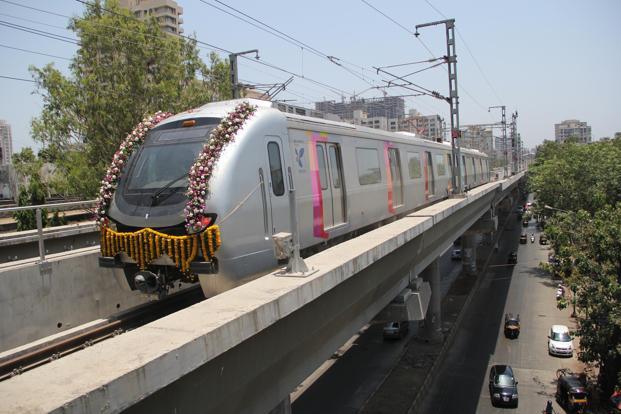
The Mumbai Metro Project – Important Things You Should Know

So after all the delays and hurdles, finally The Mumbai Metro project phase 1 was launched on 8th June, 2014. More than 2.5 lakh passengers traveled on the very first day of its launch.

mumbai-metro

Here are some facts regarding the The Mumbai Metro Project

1) The Mumbai Metro is India’s first public private partnership metro project. In this project, construction, operation and maintenance are all given to Mumbai Metro One Pvt Ltd which is a joint venture of Anil Ambani’s Reliance Infrastructure, Veolia Transport and the Mumbai Metropolitan Region Development Authority.
Read More

Study Of The Strength Geopolymer Concrete With Alkaline Solution Of Varying Molarity

By
M.ADAMS JOE (Associate Professor, Dept. of Civil Engineering, TREC, Nagercoil, Tamilnadu,India.)
A.MARIA RAJESH (Assistant Professor, Dept. of Civil Engineering, ACEW, Nagercoil, Tamilnadu,India.)
ROY MAMMEN (Director of Quality Assurance, Dept. Of Built Environment Engineering, Muscat College,Oman.)

ABSTRACT
Manufacture of Portland cement produces large of volumes of carbon dioxide and other gases. Releasing these gases causes atmospheric pollution and subsequent environmental degradation. Finding a suitable alternative solution to mitigate the environmental degradation caused by using Portland cement is very important for environmental sustainability. The use of geopolymer concrete as an alternative material over Portland cement concrete to reduce the adverse effects on the environment is investigated in this paper. The paper also critically analyses the economic and environmental benefits of geopolymer concrete and address the financial and environmental issues associated with the production and use of Portland cement. Geopolymer cement utilizes industrial waste materials such as fly ash from thermal power stations to provide a practical solution to waste management as well as environmental protection methods.

Geopolymer concrete products are known to possess far better durability and strength properties than Portland cement concrete. These properties are investigated extensively in laboratory to verify and confirm the superior durability and strength properties. The paper also discusses the factors which restrict the use of geopolymer concrete as an alternative to Portland cement concrete. Laboratory tests are conducted on compressive strength, split tensile strength and flexural tests for specimens with combination of different molarity. The results obtained are compared analytically and graphically

Keywords—GPC, Low calcium flyash, GGBS, steel fibres, Alkaline liquid, compressive strength, split tensile strength and flexural Strength
Read More

Concrete Mix Design – ITS Acceptance

By
KAUSHAL KISHORE
Materials Engineer, Roorkee

Concrete mix design is the process of choosing suitable ingredient of concrete and determining their relative quantities with the object of producing as economically as possible concrete of certain minimum properties, notable workability, strength and durability. It should be explained that an exact determination of mix proportions by means of table or computer data is generally not possible. The materials used are essentially variable and many of their properties cannot be assessed truly quantitatively. A Laboratory trial mix does not provide the final answer even when the moisture condition of aggregates are taken into account. Only a mix made and used on the site can guarantee that all properties of the concrete are satisfactory in every detail for the particular job in hand. In fact mix selection requires a knowledge of the properties of concrete and experimental data, and above all the experience of the expert who conduct the mix design. The selection of mix proportions is an art as much as a science. It is not enough to select a suitable concrete mix; it is also necessary to ensure a proper execution of all the operation involved in concreting. It cannot be stated too strongly that, competently used, concrete is a very successful construction material but, in the literal service of the word, concrete is not fool proof. The mix proportions once chosen, cannot expected to remain entirely immutable because the properties of the ingredients (cement, sand, aggregate, water and admixture) may vary from time to time.
Read More

Aakaar 2014 , IIT Bombay

Event Date: 8th-9th March
Event Time: 9.00 am to 5.00 pm
Event Status: open to all college students with valid college i cards
Free Event: Competitions and guest lectures are free to participate. Symposium, Workshop are to be paid for.
Ticket Required: College I card required for entry in the institute

Summary
Organized every year by a group of Civil Engineering students from IIT Bombay, Aakaar provides a platform to budding civil engineers across the country to create, innovate and learn from various aspects of civil engineering through competitions, events and Symposium (research paper conference). Since its inception in 2009, Aakaar has spread its wings farther attracting thousands of ambitious young engineers every year to compete for glory and recognition.
Read More

Ask a question