Awarded as the best online publication by CIDC

Posts by Kanwarjot Singh

THE FIRST TRAIN IN INDIA

By
Kaushal Kishore
Materials Engineer, Roorkee

The above engine model was made at Amritsar workshop of Northern Railway. It was unveiled infront of Roorkee railway station in July, 2005. This engine model is replica of the first rail engine used to transport construction materials for the construction of Ganges canal project brought from England and arrived in India in 1851. The engine was designed by David Joy and build by E.B.Wlson of Leeds.
Read More

BHIMGODA BARRAGE

By
Kaushal Kishore
Materials Engineer, Roorkee

I myself and Dr. G.C.Nayak remain engaged in consultency work long after our retirement. One day about 8 A.M Dr. Nayak phone me: Kaushal Engineers of irrigation department Haridwar are sitting at my house, they have a problem of granite blocks at BHIMGODA BARRAGE site. You have to go at this site at what time you will be ready to go, I said with in 30 minutes I will be ready to go.

Granite blocks are used at the fall of the BHIMGODA BARRAGE in Haridwar to control water flow and prevent erosion of the river bed. The blocks are used to dessipate the kinetic energy of the falling water, reducing its destructive power as it hits the downstream river bed.
Read More

CAUTLEY

By
Kaushal Kishore
Materials Engineer, Roorkee

Sir Proby Thames Cautley KCB ( 3 January 1802-25 January 1871 ) was the English engineer who conceived and supervised the Ganges canal during the East India Company’s rule in India. Known for his perseverance and meticulous planning, he led the massive project from 1842 to 1854, creating a canal that was the largest irrigation canal in the world at its completion. Cautley also established the Thomason college of Engineering in Roorkee (now IIT Roorkee) to train engineers for the canal project.

Read More

AQUEDUCT

By
Kaushal Kishore
Materials Engineer, Roorkee

The new Solani aqueduct on Ganges canal Roorkee was built with prestressed concrete which allows for longer spans and a simple more robust design compared to old bricks, lime- surkhi mortar masonry arches of the old aqueduct, in which 8.5 crores bricks were used, while iron railing used in the sides of two lanes were imported from England. This is interesting to note that materials bringing those days on ship from England to Indian ports take 6-10 weeks via the Suez canal or 3 to 6 months via the longer Cape of Good Hope. Calculate in it also time taken on road from Indian ports to Roorkee.

After retirement from University of now IIT Roorkee I joined M/S Roffe Construction Chemicals Pvt.Ltdd, Mumbai as it’s Chief Concrete Technologists afterwards I became it’s one of the Director.
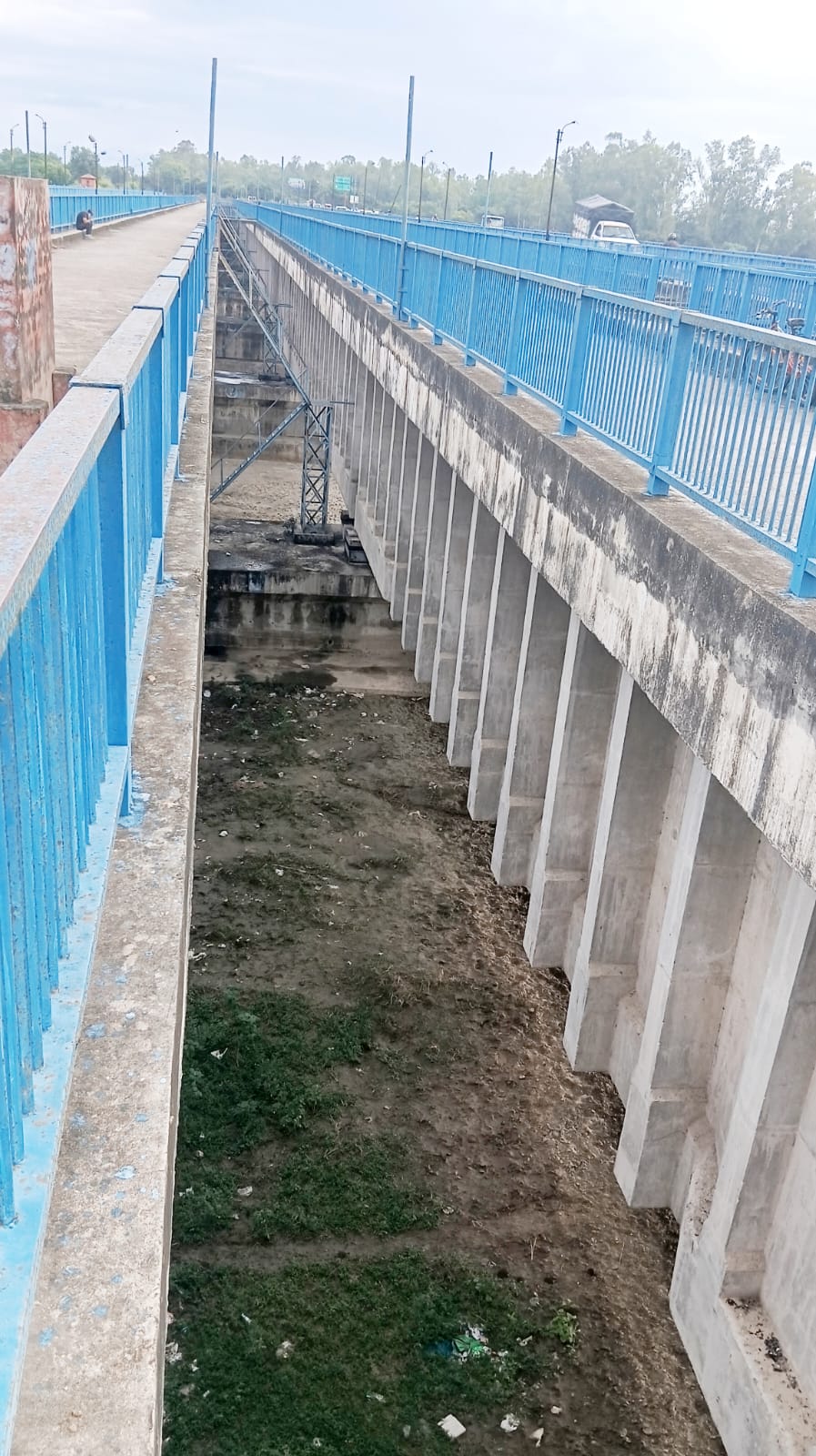

AQUEDUCT picture taken on 7/10/2025
For the contractor of above aqueduct I designed M-40 grade of concrete with Roffe superpladticizer. Those interested may read my paper by visiting Google site and log in; Civil engineering portal The Ganges canal by Kaushal Kishore.

I had designed numerous concrete mix design almost all cements of India in this I find Utra Tech cement as one of best cement OPC and PPC both With Ultratech cement I had designed numerous concrete mixes from ordinary strength to M-80 grade concrete, self compacting concrete, shot crete concrete, fibre reinforced concrete, fly ash concrete and more There is life after retirement and after retirement I worked for 30 year’s which includes in free time working in home research and testing laboratory and numerous construction sites visits almost all India and outside India. At my age of 92 years I still work for 12 hours daily.

I had never worked for money. In spite of doing so gigantic work what to say about car I even do not have 2 wheeler not any of my house not a single inch of land in this world only pension from IIT Roorkee and few clothes

IIT Roorkee Main Building

By
Kaushal Kishore
Materials Engineer, Roorkee

The Roorkee college, the first engineering college in the British Empire was established in 1847. In 1854, the college was renamed the Thomson College of Civil Engineering. In 1949, it was renamed the University of Roorkee. On September,21, 2001, it became the seventh IIT in India.

The main building of IIT, Roorkee was conducted during 1852-1854. During this period Lt.George Price, and assistant engineer on Ganga Canal, was the designer and likely supervisor of the IIT Roorkee main building. The original building finished in January, 1856.

Lt.George Price was a junior officer of the infantry. The main building is designed in the Renaissance style, a significant architectural achievement for a junior officer at that time.

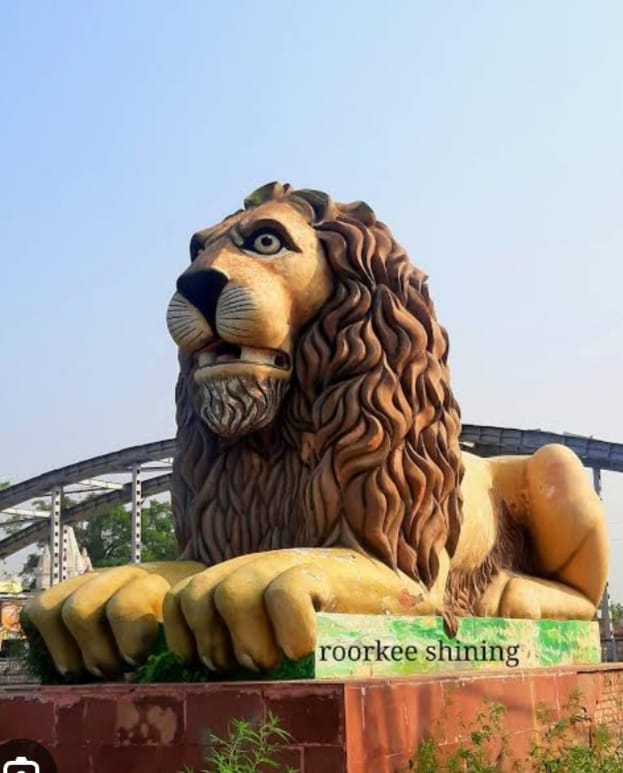
LIONS STRUCTURE, THE PRIDE OF ROORKEE

By
Kaushal Kishore
Materials Engineer, Roorkee

Two lions in sitting position on both sides of Ganga Canal between Roorkee and 2.5 kilometres away at Mehwar village were build during 1840. The fifth lion statue was installed in Sher Kothi, Roorkee, where Cautley used to live.


It is said the lions are similar in structure to the ones erected in Trafalgar square London. They are made of black granite while the lions in Roorkee are of bricks, lime- surkhi mortar. The Mason’s and other artisan’s must be from Roorkee and other places of India whose hands have made our great structures but we never know their names though their contribution in any construction is not less than other staff.

The lion statues between Roorkee and Mehwar village are built as a mark of danger zone as between these two places lot of land fillings had to be done for the canal to keep the required level.

The lions flanking the entrance of the IIT Roorkee main building were likely to be erected around 1846.

Why our cities are flooding?

By
KAUSHAL KISHORE
Materials Engineer, Roorkee

Many cities tend to expand, changing their original land and waterscapes so they become prone to flooding.

CAUSES OF FLOODING
1. Over population

In 1947 India’s population was 34 crores, now in 2024 India population is 144.2 crores increasing at the rate of 3.5 crore per year. China present population is 142.5 crore and they have controlled their population.

The land area of India is 3.3 million sq.km and China 9.6 million sq.km. Our population is more than China but our land area is about 37 percent of China land area . One of route cause of our problems is overpopulation. Our land and environment can hold only a limited population.

Read More

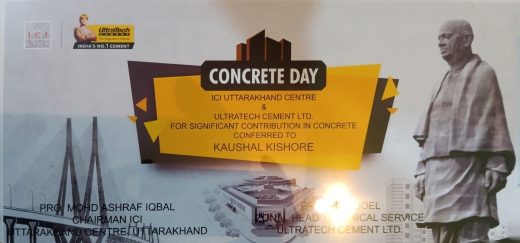
Award Conferred to Er. Kaushal kishore on Concrete Day

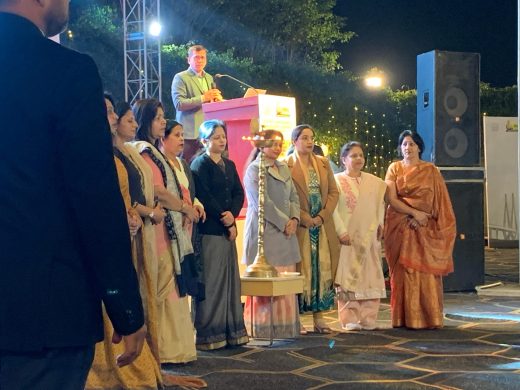
Award conferred to Er. Kaushal kishore on concrete day by ICI Uttarakhand center and Ultratech Cement Limited for significant contribution in concrete.

The award was taken on behalf of Er. Kaushal kishore by his daughter Punam Rani at Sarovar Portico hotel, Haridwar on 23/02/2024.

Award conferred to Er. Kaushal kishore on Concrete Day

Award conferred to Er. Kaushal kishore on Concrete Day

Underpinning Method of Foundation

What is Underpinning?
Underpinning is a method used to repair and strengthen the foundation of a building. During underpinning, reinforcements are positioned throughout the length or breadth of an already established base. Because of this, its weight is distributed across a larger area and rests on solid earth layers. Micro-piling and jet grouting are common underlying methods, despite being time-consuming and costly.

Underpinning is excavating the soil that’s pulling away from the structure and eliminating the foundation holding it up. There will be movement in the building when the current foundations become weakened. The property’s foundations and structure are strengthened by installing new, more robust materials and digging deeper footings on top of the more stable growth.
Read More

Steel Quantity Calculator

Steel is the most used material in construction industry as it provides tensile strength to concrete. Please note the formula mentioned below is based on a thumb rule which is mostly used by civil engineers on field.

We need to first calculate the volume of concrete and then we multiply them with the Steel Weight in each member type. Refer to the table below for each member’s weight.

Use this tool to calculate the quantity of steel required.

Read More

Ask a question