Awarded as the best online publication by CIDC

Posts by Kanwarjot Singh

World’s Longest and Deepest Train Tunnel – Gotthard Base Tunnel

As on June 1, 2016, the twin tubes of GBT (Gotthard Base Tunnel) which run from north to south under the famous Alps is world’s longest and deepest train tunnel.

The Project Background
The first thought of building a tunnel under the Alps was given way back in 1947 but the commission started deliberations in 1963. Then in 1992, the Swiss voters gave the go ahead to this project via referendum and the on site work started in 1995. The TBM’s (Tunnel Boring Machines) were deployed to work in 2002 from both the North and South end. In March 2011, the tunnel boring was completed.

Read More

Toilet Flooring with Tile Spacers

INTRODUCTION
It was observed from our many of the project sites that the flooring tiles used in toilets are of joint free type. It was reported by from the handed over flats of deferent projects that toilet floor has the major problem of leakage.

While going through the issue it was found that the joint free tiles that we are using in the floor are the reason for the leakage. Since the joint between the tiles are too small, it difficult to seal the joint completely, this leads to the penetration of water through the joint and resulting in leakage. Also these joints does not account for the expansion and contraction due to temperature by tiles, it will result in the failure of tiles.

Hence as a corrective action for this issue we suggest for the usage of the Tile spacers during the tile lying in toilet floors.

Why use tile spacers?

Read More

Rust / Corrosion of Reinforcement Bars – A challenge to overcome

By
Mr.Sourav Dutta
Manager (Civil)
Tata Steel Ltd

Rusting/Corrosion are mainly caused due to:
1. Prolonged exposure of rebar to atmosphere/rainfall without any precaution.
2. Aggressive/saline/toxic environment.

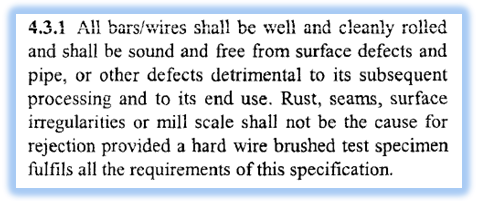
RUST is caused by the reaction of air (O2) and moisture (H2O), and it is a common and natural phenomenon for most steel products. IT SHALL NEVER BE CAUSE OF CONCERN/REJECTION OF REBAR, AS PER BIS.

Fig  Guideline of BIS1786-2008
Fig : Guideline of BIS1786-2008

Read More

Study Of Planning of Public Building

By
Er. Vikas Ubale
Vidya Pratishthan’s College of Engineering, Baramati

INTRODUCTION
Urban India today, faces serious challenges of growth and its management. Across geographies, the issues of urbanization manifest in the form of overcrowding, congestion, insufficient infrastructure, inadequate service provisioning mainly in terms of drinking water, sanitation, energy, transport, solid waste management, environmental degradation, and pollution, etc. These, along with the poor management of rapid growth, affect the socioeconomic development of the country.

So by using newly and broadly available technique in construction infrastructure town planning engineer or planner can establish well developed buildings. Which are good in aesthetic safety proof and any disaster free. Public buildings are old in construction such as famous auditorium markets schools colleges are good in construction but sometimes safety issues are creates for such kind of view it is necessary to study and built safer public building. Again with safety there are lot of energy systems are used in public buildings such as lights fuels gas water etc. Due to urbanization these things are very much required to human beings but these things are non renewable or pollution making things so it is need to use concept of green buildings used in the public buildings.

LITERATURE REVIEW
Plan of the building is the assembling and grouping and arranging its component parts in systematic manner and in proper order. So as to form a meaningful wholesome and homogeneous body with a comprehensive look out to meet its functional purpose.

Read More

How to Assess the Quality of Fine Aggregate at Site?

1. Introduction
There are lots of methods and test, that we can use for assessing the quality of construction sand or Common sand. But when it comes to the case of site practices, the methods like bulk density, bulkage, specific gravity test etc, become difficult or up to an extent impossible. There comes the importance of Sieve test on fine aggregates.

Sieve testing is one of the very fast methods of checking the quality of construction sand. Even though, the result of sieve test cannot be considered as the final result to ensure the quality of sand.

Read More

ETSE – 16

DST – SERB Sponsored
Two Day National Workshop on Emerging Trends in Structural Engineering (ETSE – 16)
11th – 12thMarch, 2016

Organized by
Department of Civil Engineering
K L University
Vaddeswaram
Guntur District – 522502
Andhra Pradesh

About K L University:
Koneru Lakshmaiah College of Engineering was established in the year 1980. The College attained autonomous status and has become a deemed to be University with effect from 2009.It is a pioneer in the field of Education and Research. K L University is recognized as one of Asia’s best private University with highlyqualified faculty. K L U is accredited by NAAC of UGC with “A” Grade and is approved by AICTE, New Delhi. This University is gearing up to emerge as one of the topnotch institutions with world class R & D Infrastructure and Academic ambience.
Read More

Airfield Pavement Engineering & Maintenance Conference 2016

Event Name: Airfield Pavement Engineering & Maintenance Conference 2016
Event Date: 17 to 20 May 2016
Event Location: Singapore
Contact Email: [email protected]

Event Website: http://www.equip-global.com/airfield-pavement-engineering-amp-maintenance-conference-2016
Read More

ICES’16 – Sustaining Tomorrow

International Civil Engineering Symposium (ICES’16), an initiative by ASCE-VIT in collaboration with the American Society of Civil Engineers India section and School of Civil and Chemical Engineering of VIT University is the ultimate destination for civil engineers since past 2 years with a participation of over 1000 students, professionals, researchers and faculties.
Read More

Noise Pollution from Vehicular Traffic from Selected Junctions in Bengaluru

By
Paul Pop, Rashmi Kulranjan, Nived Uthaiah. P, Radhika V G
St Joseph’s College, Bengaluru

Mahesh Kashyap, Consultant, Bengaluru

ABSTRACT
Noise pollution can be defined as the unwanted sound that is released to the environment and disturbing the human beings. Sources of noise pollution include industrial sources, non-industrial sources, vehicles, uncontrolled use of loud speakers, construction activities such as drilling, etc. Noise levels from vehicles through engines and horns are the main cause of concern in cities and may potentially contribute about 60% of total noise pollution. An attempt was made to measure noise levels emanating from vehicles on selected roads within a radius of approximately two kilometers from St Joseph’s College. These are major roads that witness heavy traffic during peak and non-peak hours. Traffic volume and noise levels were measured at various junctions on these roads during peak and non-peak hours. The study also includes remedial measures that can be implemented to reduce the noise levels.

Keywords: Noise, Vehicles, Pollution, Decibels
Read More

AAKAAR 2016, IIT Bombay

AAKAAR is an annual technical department festival of IIT Bombay celebrated every year to serve as a platform for likeminded civil engineering students all over the countryto share their ideas. It aims at creating a platform to compete, learn and promote Civil Engineering amongst the education fraternity through Competitions, Events and Symposium (research paper conference). Launched in the year 2009, Aakaar has gone on to become the undisputed frontrunner among civil engineering festivals. Taking this legacy forward, AAKAAR 2016 has been launched with the theme of ‘Need of the Hour: Smartness’ to serve as a platform to discuss and provide smart and feasible solutions to mitigate the problems being faced by the society.
Read More

Ask a question