
Awarded as the best online publication by CIDC

Posts by Kanwarjot Singh

Manufacturing in RCC Construction – Prefabricated rebars

By
Priyanka Gupta

Three decades back, a construction site was a place where all building materials were brought in fabricated or mended as per need and then used. For example cement, sand, stonechips and water was assembled at construction site; mixed as per design and used. Brick kilns were the only manufacturing/ prefabrication done in advance for construction. Storing of inventory at construction sites wasvery much prevalent.

The concept of factories and automobile industry like ‘lean engineering’, ‘just in time delivery’ and prefabrication have changed the very picture of construction site. But till early 2000 prefabrication in construction rebars was only in concept. Around 2010 prefabrication of TMT rebars started in India and now it has become indispensable for both large as well as small scale project.
Read More

Bridge Design Practice in North America – An Overview

By
Isidro P. Buquiron

Introduction
The primary objective of code specifications in bridge design is public safety. Thus, in the United States, the American Association of State Highway Officials (AASHO) was formed in 1914 which later on issued the first edition of the Standard Specifications for Highway Bridges and Incidental Structures in 1931 [1]. The concept of safety provided in this document is to guarantee that all structural element in the system in part and as a whole must have minimum resistance that will exceed the load and demand applied to the structure during its specified years of service. In Canada, specifically in Ontario, the American Association of State Highway and Transportation Officials (AASHTO) specification was widely used, however unofficially before the first edition of the Ontario Highway Bridge Design Code (OHBDC) was issued in 1978 [2].

Read More

Design Aspects For Terrorist Resistant Buildings

ABSTRACT:

All western democracies are now acutely aware of the apocalyptic consequences of a well-orchestrated attack on high-profile government facilities and other related targets. Many of these buildings are historical, ornate, listed and constructed using traditional techniques. Many of the modern retrofitted reinforcement techniques used to protect these structures against terrorist attacks are unsightly, intrusive or inappropriate. However, security specialists are well aware that while there might be little that can be done to defend a building against an aircraft attack, much can be done to defeat the more traditional car bomb and bullet. The methods available to the structural engineer to strengthen existing structures and provide resistance to the effects of a blast attacks are discussed in this paper.

1. INTRODUCTION:

The design of civilian or commercial buildings to withstand the effects of a terrorist blast is unlike the design of military installations or the design of embassy buildings. The objectives of the “Structural Engineering Guidelines” for the Design of New Embassy Buildings are to prevent heavy damage to components and structural collapse. Adherence to the provisions of the guidelines will minimize injuries and loss of life and facilitate the evacuation and rescue of survivors. The blast-protection objective of any commercial or public building must be similar to those of embassy structures, that is, to prevent structural collapse, to save lives, and to evacuate victims.

Architectural and structural features play a significant role in determining how the building will respond to the blast loading. These features can include adjacent or underground parking, atriums, transfer girders, slab configurations, and structural-frame systems. The keep-out distance is vital in the design of blast resistant structures since it is the key parameter that determines the blast overpressures that load the building and its structural elements. The degree of fenestration is another key parameter as it determines the pressures that enter the structure. The smaller the door and window openings the Embassies and military structures occupy secure sites with substantial keep-out distances better protected the occupants are within the structure. Following these key parameters,

Read More

Different Failures in RCC Buildings

By
Priyanka Gupta

1.0 Introduction

In small residential buildings the quality of construction is seldom questionable. The reason varies from poor building material quality to lack of knowledge of good construction practices. Most of the times, engineers are ignored by individual house owners and masons are given sole responsibility of both design and construction. Almost all structural engineers practicing in India will agree that 99% of the failures of structures in India are not due to design failure.

Explaining the different aspect of construction that a normal home builder, engineer or contractor needs to remember.

Read More

Comparison Between CPCC, FBEC & CRSD

By
Priyanka Gupta

Before doing the comparison study lets know what these terms mean.
CPCC – Cement-Polymer Composite Coated Rebars
FBEC – Fusion Bonded Epoxy Coated Rebars
CRSD – Corrosion Resistant Steel Deformed Rebars

1.0 Corrosion Control of Reinforcement bars (Rebars)
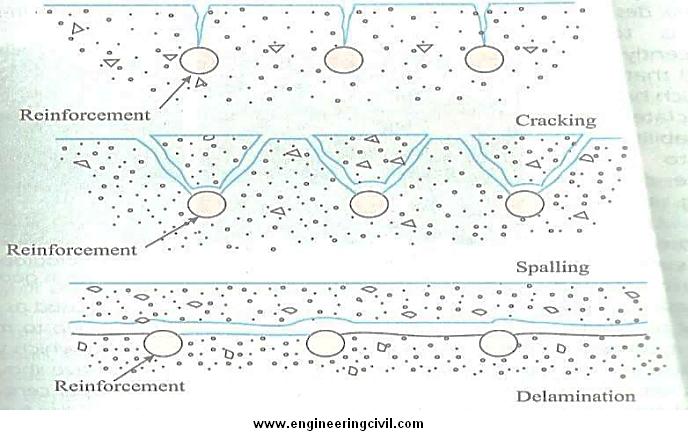
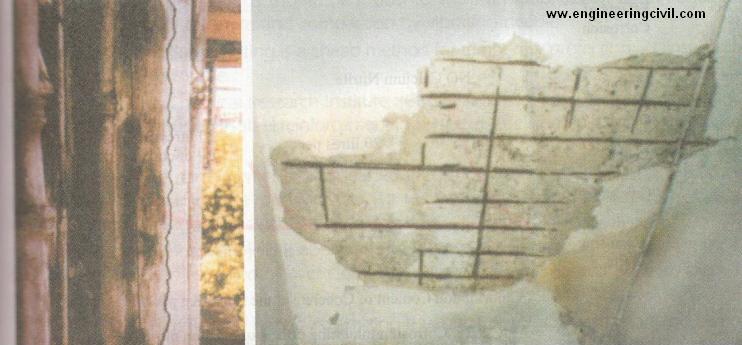
40% of failure of structures is on account of corrosion of embedded steel reinforcement in concrete. Therefore corrosion control of steel reinforcement is a subject of paramount importance.First and foremost for corrosion control is the good quality of concrete through good construction practices.

Fig. 1 Different types of crack formation

Fig. 2 Crack formed due to bursting pressure on account of rusting of reinforcements

Read More

Safety / Stability of RCC structure during earthquake – A challenge to overcome

India has been plagued by some catastrophic earthquake tremors in past that have caused loss of property and human beings:

Date Location Effect Magnitude
January 3, 2016 North East India 11 dead, 200 injured 6.7
May 12, 2015 Northern India, North East India, Bihar West Bengal (Epicenter at Nepal) 218 (44 killed in India) 7.3
April 25, 2015 Northern India, North East India, Gujarat (Epicenter at Nepal) 8,900+ 7.8
September 18, 2011 North East India, Gangtok, tremors felt in Delhi, Kolkata, Lucknow and Jaipur 118 6.9
October 8, 2005 Kashmir 1,30,000 7.6
December 26, 2004 Third deadliest earthquake in the history of the world, the tsunami generated off west coast northern Sumatra, India, Sri Lanka, Maldives 283106 (15000 killed in India) 9.1
January 26, 2001 Gujarat 20,000 7.6/7.7

However, during the earthquake in New Zealand on 3rd September 2010 (magnitude on Richter’s scale: 7.0), only 2 people were injuredwhich was caused by falling masonry and glass. Interestingly, the said earthquake had struck when most people were asleep. Therefore it is clear that “EARTHQUAKES DON’T KILL PEOPLE, BUILDINGS DO!
Read More

The Use of Automation in Construction Industry

AKSHAY S. TEJANKAR
3rd Year, Civil Engineering Department
Shri Ramdeobaba College of Engineering and Management, Nagpur

Abstract: The construction industry’s contribution to the gross domestic product (GDP) in the developing countries like that of in India is about 10%. Under the Make in India scheme, it is expected that $1000 Billion investments for infrastructure sector would be accomplished in the next few years. Today the construction industry is one of the most unpracticed fields in terms of automation. The importance of construction automation has grown rapidly in developed countries. In developing countries like India, the construction industries need automation technologies such as new machineries, electronic devices , the automation of road, tunnel, and bridge construction; earthwork, etc.

The construction industry being labor intensive requires more numbers of skilled labor, good quality of work, and increase in productivity etc. The problems associated with construction work such as decreasing quality of work, labor shortages, and safety of labor and working condition of projects can be overcome by new innovative technologies such as automation which has the potential to improve the quality, safety, and productivity of the construction industry.

Today, it is evident that the level of automation in construction is very low in comparison with current technological advances. That is why we must make new efforts to increase the automation level of this important sector.

Keywords: Automation, construction industry, Infrastructure projects

Read More

Prevention of corrosion in RCC by bacteria

BY
ANBARASAN.R, MANIKANDAN.P AND SURESH.S,
Department of civil engineering,
IFET College of Engineering. Tamil Nadu, India.

Abstract
Steel gets oxidise (corrosion) in the present of oxygen and water. Even present of oxygen in the concrete pore will not cause a corrosion at high alkaline environment. Concrete contains microscopic pores which contain high concentrations of soluble calcium, sodium and potassium oxides, this creates alkaline condition of pH 12–13. The alkaline condition leads to a ‘passive’ layer forming on the steel surface. The dense passive layer over the reinforcement prevents the alkalinity. This paper involves in the prevention of corrosion by maintaining alkalinity in concrete by using bacteria.

Key words: Reinforced concrete, corrosion, passive layer, alkaline, bacteria.

Read More

Application of Nanotechnology in Smart Civil Structures

By
Yash Kothari 1, Snehal Dewalkar 2
1Department Of Civil Engineering, Sinhgad Academy Of Engineering (SAE), Kondhwa (BK), Pune-48, India
2Department Of Civil Engineering, Sinhgad Academy Of Engineering (SAE), Kondhwa (BK), Pune-48, India

Abstract
Nanotechnology has the potential to make construction faster, safer, cheaper and more varied, resulting in smart construction. Automation of nanotechnology construction can allow for the creation of structures from advanced homes to gigantic skyscrapers much more quickly and at much lower cost and higher efficiency. In the near future, Nanotechnology can be used to sense cracks in foundations of structures and can send nanobots to repair them. It can also provide self powered failure prediction and prevising mechanisms for high capital structures.

This paper explores the vision in making of smart and innovative infrastructure and leading a smart city with the help of application of nanotechnology in civil structures.

The study of nanoscience and various nanoparticles and their implementation in construction field is illustrated in this paper. The article further emphasizes more on the futuristic demand and application of nanotechnology in constructing smart structures. The paper is managed to be written in simple language for easy grasping.

Read More

Study On Behaviour Of Concrete Partially Replacing Quartz Sand As Fine Aggregate

BY
E.Divya1 , R.Shanthini2, S.Arulkumaran3
Student, Dept. of civil engg., IFET college of engg., India1, 2
Asst. professor, Dept. of civil engg., IFET college of engg., India3

ABSTRACT
The use of quartz sand as replacement for sand is an economical solution for making the concrete resistant to weathering. The paper presents a concrete mix design procedure for partial replacement of sand with quartz sand. Present method was performed to evaluate the additional compressive, flexural strength with higher slump over conventional concrete in which sand is replaced with 0%, 25%, 50% and 100% of quartz sand by weight with 1% super plasticizers. The research also revealed that there is possibility of replacing fine aggregate with quartz sand in the production of structural concrete. The mix proportion adopted was 1:1.7:3 as per 10262:2009. Compressive and flexural strength tests were carried out to evaluate the strength properties of concrete at the age of 7 and 28 days. Modulus of elasticity tests were carried out at the age of 28 days.

Read More

Ask a question