Awarded as the best online publication by CIDC

Posts by Kanwarjot Singh

Proctor Compaction Test

AIM OF THE EXPERIMENT
This test is performed to determine the relationship between the moisture content and dry density of a soil for a specified compactive effort.

CODE OF REFERENCE
IS 2720 (Part 2)- 1980 Methods of test for soils: Part 7
Determination of water content- dry density relation using light compaction.

IS 2720 (Part 2)- 1973 Methods of test for soils: (Part 2)
Determination of water content.
Read More

Methods of Levelling | Classification of Direct levelling methods

Keywords: Levelling, Direct levelling, Trigonometric levelling, Barometric levelling, Hypsometric levelling, Simple levelling, Differential levelling/Compound levelling, Check levelling, Profile levelling, Cross-section levelling, Precise levelling, Reciprocal levelling

We have already discussed what is mean by levelling and which are the main terminologies used in the levelling. If you want to refresh this concept, you can read them here.
Read More

Levelling | Purpose | Terminologies

Keywords: Levelling, Surveying, Dumpy level, benchmark, Mean Sea Level, M.S.L, Elevation, G.T.S benchmarks, arbitrary benchmarks, datum, Bombay port, Reduced level, Survey of India

What is Levelling?
Levelling is defined as the process of determining the relative heights or elevations of points or objects on the earth’s surface. The elevation of a point is defined as its vertical distance measured above or below a reference level which is called datum. The most widely used datum surface is the Mean Sea Level, M.S.L

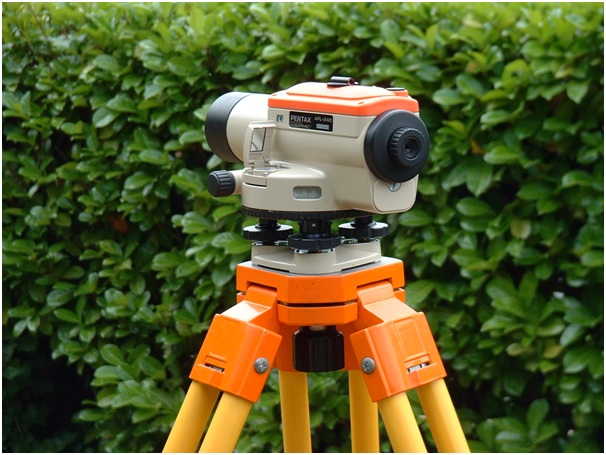
Levelling instrument: Dumpy level
Levelling instrument: Dumpy level (Source: Wikimedia Commons)

Read More

Flakiness Index Test for Aggregates

AIM OF THE EXPERIMENT:
To determine the Flakiness Index of the given sample of course aggregate.

CODE OF REFERENCE:
• IS 2386(Part 1):1963 Methods of Test for Aggregates of Concrete- Particle Size and Shape. Reaffirmed Dec 2016
• ASTM 4791-10: Standard Test Method for Flat Particles, Elongated Particles or Flat Elongated Particles in Coarse Aggregates, American Society for Testing and Materials.

Read More

Translucent Concrete

INTRODUCTION
Translucent concrete is a light transmitting concrete based building material. It works on the property of Nano-Optics. Its light transmitting is mainly due to uniform distribution of high numerical aperture Plastic Optic Fibres (POF) and hence it is also known as LiTraCon.It is produced by adding about 4% to 5% of optical fibres by volume in concrete mix. It was first mentioned in a Canadian Patent in the year 1935. As polymer based optical fibres and optical glass fibres were developed, it led to the increased rate of invention in this field.

Fig 1 Translucent Concrete building known as Lucem GmbH
Fig 1: Translucent Concrete building known as Lucem GmbH
COURTESY: BFT INTERNATIONAL

Read More

Buttress Dams and its Classifications

What are buttress dams?
A buttress dam consists of water retaining sloping membrane or deck on the upstream which is supported by a series of buttresses at right angles to the axis of the dam. The upstream water retaining sloping membrane may be in the form of a reinforced concrete slab or a series of arches or thickened buttress heads. At the upstream end a cutoff is provides to prevent or reduce the seepage of water.

buttress dams
Buttress dams [1]

Read More

An Experimental Study of Human Hair in Concrete as Fibre Reinforcement

By
G. Ajaya Kumar O. Ganesh Kumar K. Damodar C. Jayasree Simpa Karmakar
Sai Ganapathi Engineering College, Visakhapatnam, Andhra Pradesh, India

Abstract— Since the ancient times, many researches and advancements were carried to enhance the physical and mechanical properties of concrete. Fiber reinforced concrete is one among those advancements which offers a convenient, practical and economical method for overcoming micro cracks and similar type of deficiencies. Since concrete is weak in tension hence some measures must be adopted to overcome this deficiency. Human hair is generally strong in tension; hence it can be used as a fiber reinforcement material. Human hair Fiber is an alternative non-degradable matter available in abundance and at cheap cost. It also reduces environmental problems. Also addition of human hair fibers enhances the binding properties, micro cracking control, Imparts ductility and also increases swelling resistance. The experimental findings in our studies would encourage future research in the direction for long term performance to extending this cost of effective type of fibers for use in structural applications. Experiments were conducted on concrete cubes, cylinders and beams of standard sizes with addition of various percentages of human hair fiber i.e., 0%, 0.5%, 1% and 1.5% by weight of cement, fine & coarse aggregate and results were compared with those of plain cement concrete of M-20 grade. For each percentage of human hair added in concrete, four cubes, three cylinders and three beams were tested for their respective mechanical properties at curing periods of 3 , 7 and 28 days. Optimum hair fiber content was obtained as 1.5% by weight of cement.

Keywords: Human Hair, Concrete, Fibre Reinforcement

Read More

TRIAXIAL SHEAR TEST ON COHESIVE SOILS

A number of methods are used for conducting the triaxial test on cohesive soils. The commonly used methods are described as below:

  • Consolidated-undrained test

A deaired, coarse porous disc or stone is placed on the top of the pedestal in the triaxial test apparatus. Then a filter paper disc is placed over the porous stone. The prepared cohesive soil specimen is then placed over the filter paper disc of the stone. The usual size of the specimen is about 37.5 mm diameter and 75.o mm height. A porous stone is also placed on the top of the specimen. After that a deaired vertical filter strip papers are placed at regular spacing around the entire periphery of the porous stone such that these assembly touch both the stones. The cohesive soil sample in then covered in a rubber membrane, in which it can slid over the specimen with the help of the attached membrane stretcher. The membrane stretcher is completely covered with the specimen using O-rings.

Read More

Vane Shear Test

The undrained shear strength of soft clays can be determined in a laboratory by a vane shear test. The test can also be conducted in the field on the soil at the bottom of a bore hole. The field test can be performed even without drilling a bore hole by direct penetration of the vane from the ground surface if it is provided with a strong shoe to protect it.

The vane shear test instrument consist of a vertical steel rod with four thin stainless steel blades (or vanes) fixed at its bottom end. The IS: 2720-1980 code recommends that the height, H of the vane should be equal to twice the overall diameter, D. The diameter and the length of the rod are recommended as 2.6 mm and 60 mm respectively.
Read More

Shrinkage Limit Method To Determine Specific Gravity

Shrinkage limit is defined as the smallest water content at which the soil is saturated. It is also defined as the maximum water content at which a reduction of water content will not cause a decrease in the volume of the soil mass. In other words, at this water content, the shrinkage ceases.

In the below block diagram, stage 1 represents a soil sample which is fully saturated with a water content greater than shrinkage limit. Stage 2 represents soil sample which has water content equal to shrinkage limit. Stage 3 represents the soil sample when it is oven dried, i.e., the water content is removed completely. The total volume V3 in stage 3 is same as the total volume V2in stage 2. Let Msbe the mass of solids.
Read More

Ask a question