Awarded as the best online publication by CIDC

Posts by Kanwarjot Singh

Readybuild: Pre-fabricated rebars ready-to-fix at site leading to faster construction

By
Sourav Dutta
Manager-Civil

Common Hazards/issues normally countered at all construction sites:

Human error in rebar fabrication (manual).
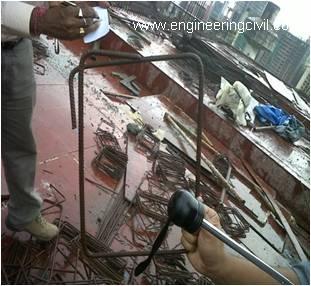
Fig 1 Incorrect bend
Fig 1 : Incorrect bend

Compromise with safety and quality.

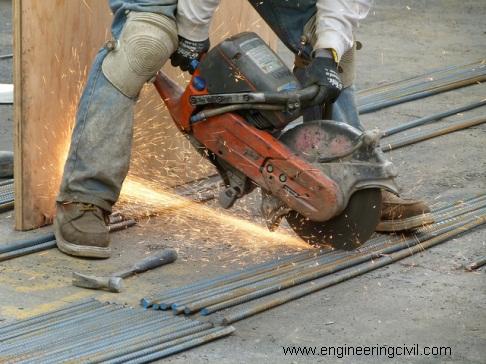
Fig 2 Safety and Quality issues upon using rebar cutter
Fig 2 : Safety and Quality issues upon using rebar cutter

Procurement schedule delays affecting site progress, and thereby delaying project completion.

Inventory management. Capital locked in inventory.
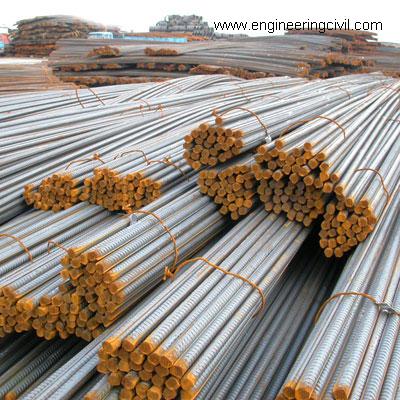
Fig 3 Lack of space at site affects storage procurement
Fig 3 : Lack of space at site affects storage/procurement

Rebar pilferage.
Read More

Higher Diameter Reinforcement- Leading to faster/cheaper construction

By
Sourav Dutta
Manager-Civil

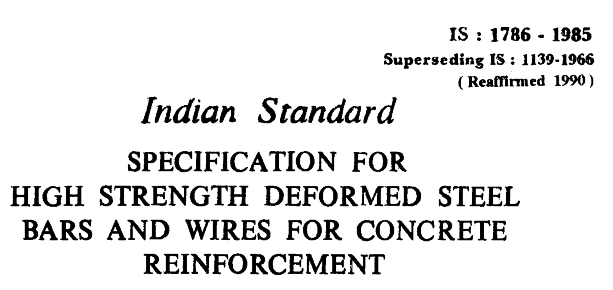
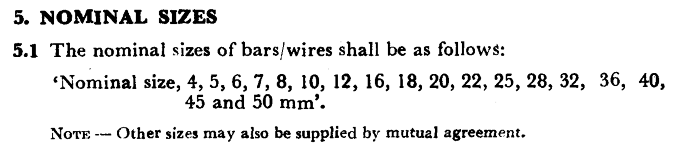
The first version of BIS 1786 came out in 1985 when in Cl.5.1, the code suggested the nominal sizes as shown below:

Fig 1 (s) BIS1786-1985 and the relevant clause
Fig 1 (s) BIS1786-1985 and the relevant clause1
Fig 1 (s) : BIS1786-1985 and the relevant clause

The next version of the code BIS 1786 was introduced in 2008, where nominal sizes were rationalized and nominal sizes 7 mm, 18 mm, 22 mm, 45 mm and 50 mm had been removed. In Cl. 6.1, the code had suggested the nominal sizes as shown below:

Read More

Higher grade reinforcement: Path to future

By
Sourav Dutta
Manager-Civil

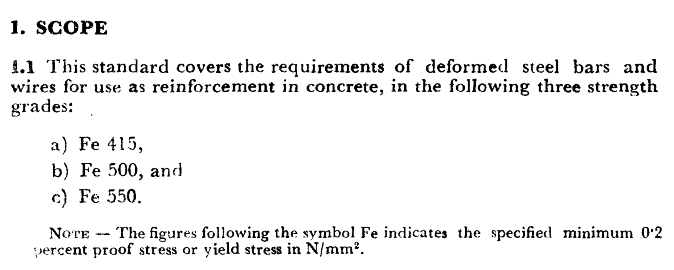
The first version of BIS 1786 came out in 1985 where in Cl.1.1, the code had put the detailed physical and chemical properties, testing procedures of following strength grades of HYSD (High Yield Strength Deformed) bars/wires as shown below:

Fig 1 (s) BIS1786-1985 and the relevant clause

Fig 1 (s) BIS1786-1985 and the relevant clause1
Fig 1 (s) : BIS1786-1985 and the relevant clause

The next version of the code BIS 1786 was introduced in 2008, where new strength grade Fe600 had been introduced. Also, two categories based on elongation for each grade except Fe600 had also been introduced. Thus in Cl.1.1, the code had put the detailed physical and chemical properties, testing procedures of following strength grades of HYSD (High Yield Strength Deformed) bars/wires as shown below:

Read More

Asia Pacific Rail 2017

21-22 March 2017 | HKCEC, Hong Kong

About Asia Pacific Rail
The most exclusive and influential railway gathering in the region, Asia Pacific Rail attracts over 1,500 attendees from Asia and across theglobe each year.

Read More

Batching and Mixing of Mortar And Concrete Ingredients

By
Shubham Sunil Malu

ABSTRACT:
A concrete plant, also known as batch plant is device that combines various ingredients to form concrete. In general, it is a process of combining all ingredients of concrete as per the mix design. Batching and mixing are extremely important parts of mortar and concrete manufactures they influence properties of concrete both in plastic as well as in hardened stages. Also, it is one of the important processes, which is to be done to obtain a quality concrete. Many processes are carried out in various parts of the world with many changes and different equipment. There are various types of batching and mixing equipment and methods that is to say from manual to most sophisticated computerized batching and mixing. Mechanization improves quality of batching and mixing, its speed and thereby can most often result in economy.There are number of factors which are to be considered while doing the process which are discussed in this paper. Moreover, the machinery, which is to be required while making concrete or for batching process and discharging and unloading of the mixture, are also discussed in brief.
1.0 INTRODUCTION:

Read More

High Quality Cement and its Usage

By
Shubham Sunil Malu

ABSTRACT:
Concrete is a basic building material that will continue to be in demand far into the future. A world without concrete, and its dominant precursor, Ordinary Portland Cement (OPC), is hard to imagine. Although there are different types of concrete that have been developed for use in different applications, their common virtues are familiarity, versatility, strength, durability, wide availability, fire resistance, resistance to the elements and comparatively low cost.Cement industry is growing at a rapid pace in India and over the globe. Many new brands are available in the market but selection of good cement is very important for an engineer. Many a time construction project fails due to poor quality of cement.

This paper will show you what are the factors affecting the selection of cement and cement strength classification. Also, the quality control of cement and need of consistency of quality in cement. Thus the project, can be secured to extent with the selection of proper quality of cement.

Read More

High-rise canvas / Industrialization in India: Cheaper construction

By
Sourav Dutta
Manager-Civil

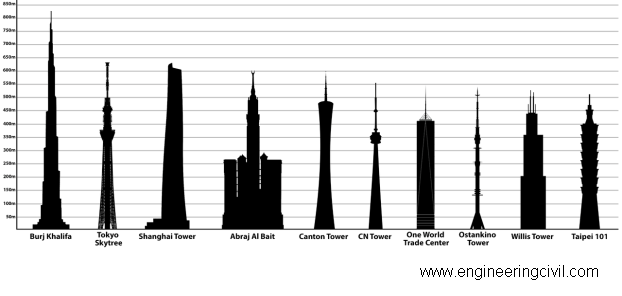
It is very clear that metro cities like Mumbai, Kolkata, Delhi and Bengaluru are having increasing development, with tier-II cities also coming up in competition, leading to large land/plot size unavailability. Accommodating increasing population will require the FSI (Floor-space index) / FAR (Floor-area ratio) to be higher.

Fig 1 High-Rise Canvas over the world now-a-days
Fig 1 : High-Rise Canvas over the world now-a-days

Read More

Compression test on concrete

By:
Shubham Sunil Malu.

ABSTRACT:
With the growth of construction industry there is need to give quality in it. Many of the projects fail in construction field because of improper results and improper testing on site. One of the basic and important test is compressive test which should be done carefully since it is taken as the backbone of all tests of civil engineering related to concrete. Compression test is required almost in every project since it gives us a brief idea of the grade and type of concrete. Many of them do small mistakes in these which includes the different exclusion of different parameters of concrete, improper procedure for filling and compacting concrete, wrong methods of testing of concrete and many more. This paper contains all the necessary parameters, equipment and the acceptance criteria of the test. It also includes procedure for filling and compacting concrete as well as methods of testing of concrete.

Read More

ICES’17

Event Description:
ICES’17(International Civil Engineering Symposium), an initiative by ASCE-VIT in collaboration with the American Society of Civil Engineers India section and School of Civil and Chemical Engineering of VIT Universitybrings to you International Conference on Sustainable Energy and Built Environment. The goal of this conference is to bring together industrial experts in the field of civil engineering to a common forum, promote research and developmental activities. Field like water treatment, hydrological processes in natural and urban environment, soil and ground water and much more are covered. All the eminent colleges around across the nation are invited for the research papers. The second day of the conference includes the poster presentation.

Read More

Myths on Beam construction – Challenge to overcome

By
Sourav Dutta
Manager-Civil

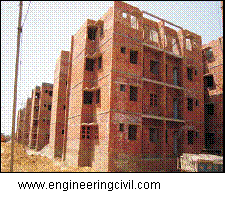
There are a number of ways in which the superstructure can be built. In areas where average to good quality bricks are available, the walls of houses for two to three storeyed constructions can be built out of bricks with the slabs, lintels, chajja etc. in reinforced concrete. Such construction is supported entirely on load bearing brick walls (Fig 1), foundation of which ultimately transfers the building load to underneath soil.

Load Bearing Construction on brick
Fig 1: Load Bearing Construction on brick

Fig 2 RCC framed construction
Fig 2: RCC framed construction

Read More

Ask a question