
AGGREGATE CRUSHING VALUE
This test helps to determine the aggregate crushing value of coarse aggregates as per IS: 2386 (Part IV) – 1963. The apparatus used is Cylindrical measure and plunger, Compression testing machine, IS Sieves of sizes – 12.5mm, 10mm and 2.36mm
Aggregate Crushing Value
Aggregate Impact Value
AGGREGATE IMPACT VALUE
This test is done to determine the aggregate impact value of coarse aggregates as per IS: 2386 (Part IV) – 1963. The apparatus used for determining aggregate impact value of coarse aggregates is
Impact testing machine conforming to IS: 2386 (Part IV)- 1963,IS Sieves of sizes – 12.5mm, 10mm and 2.36mm, A cylindrical metal measure of 75mm dia. and 50mm depth, A tamping rod of 10mm circular cross section and 230mm length, rounded at one end and Oven.
Preparation of Sample
i) The test sample should conform to the following grading:
– Passing through 12.5mm IS Sieve – 100%
– Retention on 10mm IS Sieve – 100%
Aggregate Abrasion Value
AGGREGATE ABRASION VALUE
This test helps to determine the abrasion value of coarse aggregates as per IS: 2386 (Part IV) – 1963.
The apparatus used in this test are Los Angles abrasion testing machine, IS Sieve of size – 1.7mm, Abrasive charge – 12 nos. cast iron or steel spheres approximately 48mm dia. and each weighing between 390 and 445g ensuring that the total weight of charge is 5000 +25g and Oven.
Water Absorption of Aggregates
WATER ABSORPTION
This test helps to determine the water absorption of coarse aggregates as per IS: 2386 (Part III) – 1963. For this test a sample not less than 2000g should be used. The apparatus used for this test are :-
Wire basket – perforated, electroplated or plastic coated with wire hangers for suspending it from the balance, Water-tight container for suspending the basket, Dry soft absorbent cloth – 75cm x 45cm (2 nos.), Shallow tray of minimum 650 sq.cm area, Air-tight container of a capacity similar to the basket and Oven.
Sieve Analysis of Aggregates
SIEVE ANALYSIS
Sieve analysis helps to determine the particle size distribution of the coarse and fine aggregates.This is done by sieving the aggregates as per IS: 2386 (Part I) – 1963. In this we use different sieves as standardized by the IS code and then pass aggregates through them and thus collect different sized particles left over different sieves.
The apparatus used are –
i) A set of IS Sieves of sizes – 80mm, 63mm, 50mm, 40mm,31.5mm, 25mm, 20mm, 16mm, 12.5mm, 10mm, 6.3mm,4.75mm, 3.35mm, 2.36mm, 1.18mm, 600µm, 300µm, 150µm and 75µm.
ii) Balance or scale with an accuracy to measure 0.1 percent of the weight of the test sample.
The weight of sample available should not be less than the weight given below:-
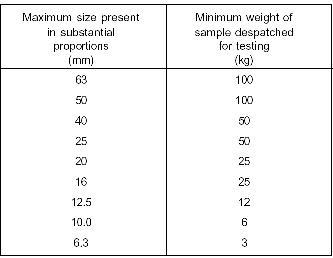
The sample for sieving should be prepared from the larger sample either by quartering or by means of a sample divider.
Test To Check Initial And Final Setting Time Of Cement
INITIAL AND FINAL SETTING TIME
We need to calculate the initial and final setting time as per IS: 4031 (Part 5) – 1988. To do so we need Vicat apparatus conforming to IS: 5513 – 1976, Balance, whose permissible variation at a load of 1000g should be +1.0g, Gauging trowel conforming to IS: 10086 – 1982.
Procedure to determine initial and final setting time of cement
i) Prepare a cement paste by gauging the cement with 0.85 times the water required to give a paste of standard consistency.
Test To Check Soundness Of Cement
SOUNDNESS
Soundness of cement is determined by Le-Chatelier method as per IS: 4031 (Part 3) – 1988.
Apparatus – The apparatus for conducting the Le-Chatelier test should conform to IS: 5514 – 1969
Balance, whose permissible variation at a load of 1000g should be +1.0g and Water bath.
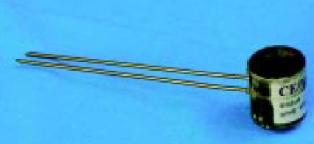
Procedure to determine soundness of cement
Test To Check Consistency Of Cement
CONSISTENCY
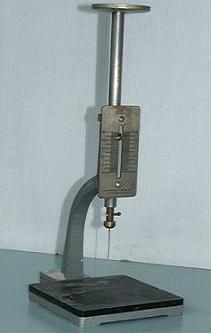
The basic aim is to find out the water content required to produce a cement paste of standard consistency as specified by the IS: 4031 (Part 4) – 1988. The principle is that standard consistency of cement is that consistency at which the Vicat plunger penetrates to a point 5-7mm from the bottom of Vicat mould.
Apparatus – Vicat apparatus conforming to IS: 5513 – 1976, Balance, whose permissible variation at a load of 1000g should be +1.0g, Gauging trowel conforming to IS: 10086 – 1982.
Test To Check Fineness Of Cement
FINENESS
So we need to determine the fineness of cement by dry sieving as per IS: 4031 (Part 1) – 1996.The principle of this is that we determine the proportion of cement whose grain size is larger then specified mesh size.
The apparatus used are 90µm IS Sieve, Balance capable of weighing 10g to the nearest 10mg, A nylon or pure bristle brush, preferably with 25 to 40mm, bristle, for cleaning the sieve.
Sieve shown in pic below is not the actual 90µm seive.Its just for reference.
Pre Engineered Buildings
Introduction to Pre Engineered Buildings
Technological improvement over the year has contributed immensely to the enhancement of quality of life through various new products and services. One such revolution was the pre engineered buildings. Through its origin can be traced back to 1960’s its potential has been felt only during the recent years. This was mainly due to the development in technology, which helped in computerizing the design and design.
Though initially only off the shelf products were available in these configurations aided by the technological development tailor made solutions are also made using this technology in very short durations. A recent survey by the Metal Building Associations (MBMA) shows that about 60% of the non residential low rises building in USA are pre engineered buildings.
Although PEB systems are extensively used in industrial and many other non residential constructions world wide, it is relatively a new concept in India. These concepts were introduced to the Indian markets lately in the late 1990’s with the opening up of the economy and a number of multi nationals setting up their projects.The market potential of PEB’s is 1.2 million tones per annum. The current pre engineered steel building manufacturing capacity is 0.35 million tones per annum. The industry is growing at the compound rate of 25 to 30 %.